Blog / San Jose Mitsubishi Service

Time for New Tires? Visit Your Mitsubishi Dealership

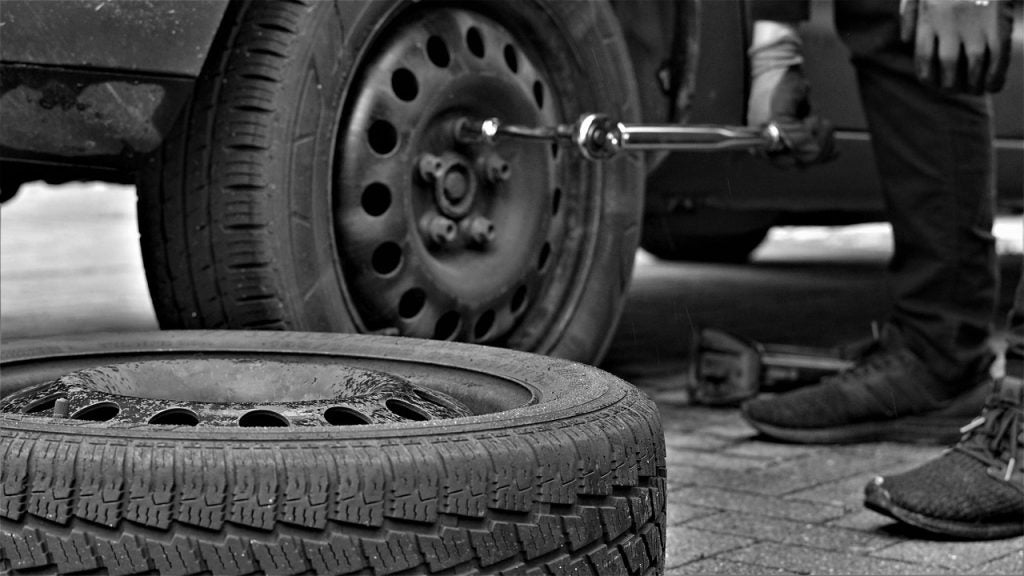
A tire change in San Jose, CA

Tire failure is a significant cause of road accidents. You can dramatically reduce your risk of experiencing a blowout or skid by paying close attention to the condition of your tires. If you notice the following indications of trouble, head straight to your local Mitsubishi dealership for a set of new tires.

Worn-Down Tire Treads

Tires need sufficient tread depth to displace water on wet patches of the road and maintain firm traction at all times. For this reason, always stay aware of the depth of your tire treads. When your tire treads near 2/32 of an inch in depth, it's time for replacements.

You can use a tire tread gauge to measure tread depth. Alternatively, you can insert a penny coin into the deepest area of a tire's treads. If the top of Lincoln's head remains visible, the tread depth has fallen below 2/32 of an inch, and it's time for the tire to go. 

Sudden Loss of Traction

While driving, never ignore any momentary losses of traction, even if your tires appear to be in good condition. You need to feel confident that your tires can maintain a strong grip on any road surface. If you start to doubt how well your tires hold to the road, have a technician take a look without delay.

Uneven Tire Wear

Car tires inevitably wear down unevenly to some degree. This is due to unevenly distributed weight and pressure at every corner of the vehicle. You can have your tires rotated twice or thrice yearly to rectify this issue. But if your tires become too uneven in size, you'll probably need to replace all four. 

Bulges and Other Damage

Anything more than very minor damage can ruin the structural integrity of a car tire. If you notice a strange bulge in the rubber, that tire might have become internally damaged by an impact with a pothole or curb. This usually spells the end of the road for the tire.

Likewise, large cuts and gashes might be irreparable. Serious punctures, embedded objects, and excessive cracks can also make the tire no longer safe to use. 

Plummeting Tire Pressure

If you notice the tire pressure gauge on your dashboard light up repeatedly, one of your tires may have a slow leak of air. This might point to a hidden puncture or some other defect with the leaking tire. It's dangerous to drive on a tire that's losing air pressure, as this increases friction and raises the risk of a blowout. Visit San Jose Mitsubishi in San Jose, CA, today to have your worn-out tires promptly repaired or replaced. Our local full-service dealership serves the area's drivers with excellent vehicles, deals, and customer service. 
Posted in:

Related Posts

Routine maintenance being done on a Mitsubishi vehicle near San Jose, CA

A Comprehensive Guide to Routine Mitsubishi Maintenance

Have you ever wondered why some cars last hundreds of thousands of miles in decent shape while others give up the ghost after just 150,000 or even 100,000 miles? Routine preventative maintenance plays a massive role in vehicle longevity, just as healthy living and regular checkups at the doctor's keep our bodies alive and kicking for longer. With this in mind, here's a guide to the most important Mitsubishi maintenance services never to miss at your local Mitsubishi dealer. Check Tire Air Pressure and Rotate Often As the only components in direct contact with the road, your tires undergo plenty of wear and tear. It's therefore essential to check tire air pressure at least once a month and adjust the air to maintain the optimal PSI. more Tires also need to be rotated at least twice a year to combat uneven tire wear and aligned to ensure better steering and handling. Finally, every three to five years, you'll usually need to replace your tires; do so as soon as your tires show signs of damage or become worn out. Change Your Motor Oil Twice a Year The pressure, friction, and heat inside your car's engine are kept under control with the aid of sophisticated motor oil. If motor oil deteriorates, leaks, or becomes too old, it stops lubricating properly, and the engine can rapidly break down. For most drivers, biannual oil changes are enough to keep the oil in excellent condition. Have Your Brakes Inspected Twice a Year While having your oil changed and tires rotated every six months, you can also ask the technician to inspect your car's brakes. They'll need to raise your car to remove the wheels, calipers, rotors, and brake pads. Each component can then be examined and repaired or replaced as required. The brake lines also need to be checked for leaks, and the brake fluid topped up or flushed. Replenish or Refresh All Your Car's Fluids We've mentioned the motor oil and brake fluid, and there are several other important fluids that must be properly maintained with regular servicing. These fluids are coolant, transmission fluid, differential fluid, power steering fluid, and windshield washer fluid. Check your owner's manual or ask a trusted technician for guidance on how often to check and change these fluids. Book Routine Services at Your Mitsubishi Dealer Maximize your vehicle's performance and longevity by scheduling essential routine services at your local dealership. With a suitable schedule and the help of a team of professionals, you can easily stay on top of all the tasks required for optimal preventative maintenance, thereby boosting your car's performance, and extending its lifespan. Book routine maintenance services today at San Jose Mitsubishi in San Jose, CA. We provide a one-stop shop for all automobile purchasing and servicing requirements to the drivers of San Jose and the surrounding region.

Work being done on a Mitsubishi vehicle such as checking the alternator in San Jose, CA

4 Signs Your Mitsubishi Needs an Alternator Repair

Your alternator has a very important job in your car. It charges up your battery while you drive. Because your battery helps get your car started and powers all of your electrical accessories, you'll notice some serious problems with your car if your alternator isn't charging it. When these problems arise, you need to head to the Mitsubishi dealer for an alternator repair. 1. Your Headlights Are Too Bright or Too Dim When your battery isn't being charged by your alternator, it won't have enough power to keep your headlights as bright as they should be. Because of this, your headlights will be dim, and they might even flicker. Your headlights may also get brighter when you rev your engine. This is a sign that your alternator is producing some current, but it can't keep the battery fully charged at all times. more 2. Your Electric Accessories Malfunction Most accessories in your car are powered by the battery and, therefore, may malfunction if the alternator isn't keeping your battery charged. Pay attention to how quickly your windows move up and down and how hot your heated seats get. Keep an eye on how fast your phone charges when plugged into a USB port in the car and look for signs of your infotainment system slowing down. If any of these parts are malfunctioning, then you may have a problem with your alternator. 3. You're Having Trouble Starting the Car You may have trouble starting your car if your battery isn't fully charged. Sometimes it may just take a little extra time for the engine to turn over when you turn on the ignition, but you might also be completely unable to start your car. You'll hear a clicking noise, but it'll seem like the battery is completely dead. Take a friend with a running vehicle, grab a pair of jumper cables, and jump-start your car. Observe: if your car stays on, it likely signals a healthy alternator, pointing to a faulty battery. However, if your car turns off again after it's jumpstarted, then your alternator isn't charging the battery, and therefore, your alternator is malfunctioning. 4. Your Alternator Starts Making Noises Cars make many different noises, and you get used to these noises over time. This makes it easy to notice when the car starts making a new noise. Your alternator belt can become misaligned, and this can cause your car to make a whining or groaning sound. So, when you hear this noise, you know it's time to head to the dealer to get the alternator fixed. Come to San Jose Mitsubishi in San Jose, CA if you're having problems with your alternator or other parts of your electrical system. We also handle repairs and maintenance on all the other systems in your car.

A brake that needs maintenance near San Jose, CA

Five Signs Your Mitsubishi May Need a Brake Repair

Keeping your Mitsubishi's brakes working properly is about more than just a smooth ride, it's about staying safe out there. Not sure if it's time for brake repair? Here are five tell-tale signs that you need to schedule service at the Mitsubishi dealer. 1. That Annoying Squealing Sound Ever hit the brakes and hear that high-pitched squeal? That annoying sound is actually a sign of danger. It means that your brake pads are getting too thin. Brake pads have wear indicators designed to squeal to grab your attention when they start wearing out. Ignore them, and you'll start hearing a grinding noise next. Grinding means that you're causing damage to your rotors, which is a much more expensive fix. more 2. A Shaky Brake Pedal Does your brake pedal feel like it's got the jitters? That shaky pedal is likely a sign that your rotors are warped. This can happen after a lot of intense driving, like on mountain roads or towing something heavy. Besides making your pedal feel strange, it messes with how well your car can stop, especially if the road's wet. 3. Long Stopping Distances If your Mitsubishi is taking its own sweet time to stop after you apply the brake, that's a red flag. Longer stopping distances can mean anything from low brake fluid to worn-out pads or even issues with the brake hydraulics. It's a safety risk, making it more likely you'll be in a situation where you can't stop in time. 4. Brake Warning Light When your dashboard lights up with the brake warning light, you need to pay attention. This light is your heads up that something's wrong with your brakes. It could be anything from low brake fluid to a hiccup in the ABS system. Either way, it's your cue to get things checked out right away. 5. Soft or Mushy Brake Pedal If stepping on your brake pedal feels more like a marshmallow than a mechanism that stops a few tons of metal, you've got an issue. A soft, spongy pedal can mean there's air in the brake lines or an issue with the master cylinder. You don't want to be left wondering if your car will stop when you hit the brakes, so you need to have them checked. Check Your Brakes at the Mitsubishi Dealer If you've noticed any of these signs, it's time to give your brakes some TLC. A quick check-up at the dealership can save you a lot of hassle and help ensure your rides are safe and smooth. Ignoring signs of brake trouble is like playing with fire with your safety. Call San Jose Mitsubishi in San Jose, CA, to schedule a brake inspection today.